
What this is: a step-by-step guide to running a virtual care consultation well.
Who it's for: the nurse, Aboriginal Health Worker, Aboriginal and Torres Strait Islander Health Practitioner or other staff member who supports the patient during the consult.
The same shape as an in-person visit
A virtual consultation follows the same shape as any visit, with a few extra steps for the technology and the consent. The remote clinician leads the clinical decisions. You are the local hands in the room, and often the trusted, familiar face that makes the patient comfortable.
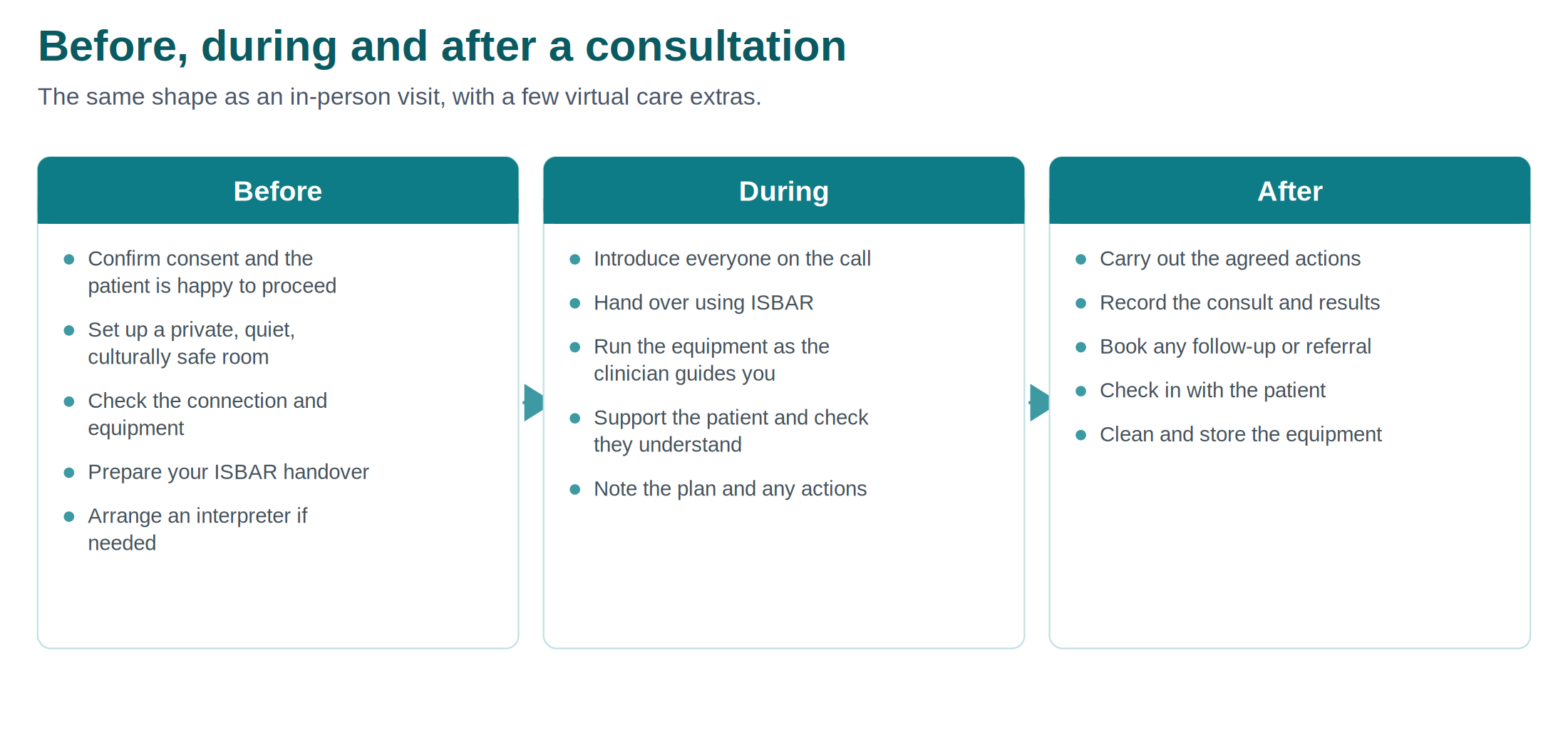
Before the consult
- Check the patient has agreed to a virtual consult and is comfortable to go ahead. They can choose face-to-face instead, and can change their mind at any point.
- Set up a private, quiet room where the consult cannot be overheard, and that feels safe and welcoming for the patient.
- Test the connection and the equipment before the patient comes in. Have your backup ready in case the connection drops.
- Arrange an interpreter if one is needed, and confirm they can join.
- Prepare your handover using ISBAR so the consult starts focused.
During the consult
- Introduce everyone on the call, including yourself, the patient, anyone with them, and the remote clinician.
- Hand over clearly using ISBAR.
- Run the equipment as the clinician guides you, the camera, stethoscope, otoscope or vitals devices. Tell the clinician what you are seeing and feeling in the room.
- Watch the patient, not just the screen. Check they understand and are comfortable, and speak up if something does not seem right.
- Note the plan and any actions as you go.
After the consult
- Carry out the agreed actions, such as medications, tests or wound care, within your scope of practice.
- Record the consultation and any results in the patient's record.
- Book any follow-up or referral while it is fresh.
- Check in with the patient about how it went and answer any questions.
- Clean and store the equipment so it is ready for next time.
A note on cultural safety
The patient decides whether care feels safe. Use the patient's name and the way they prefer to be addressed, make space for family or a support person if the patient wants them, and never rush consent or explanation. If you are the local person the patient trusts, that trust is part of the care, not separate from it.
Need help?
- Visionflex support: visionflex.com/support | support@visionflex.com | +61 2 8914 4000 (9am to 5pm AEST)
- See also: ISBAR and A to G clinical handover; Setting up your virtual care space; The patient-end role
Visionflex acknowledges the Traditional Custodians of Country throughout Australia and pays respect to Elders past, present and emerging.