
What this is: how to run multi-party case conferences and bring allied health into a resident's care using virtual care.
Who it's for: registered nurses, care coordinators and clinical leads.
Some of the best clinical decisions happen when the whole team is in the room together. The trouble is, getting a GP, a specialist, a pharmacist, an allied health professional and the family in one room at one time is nearly impossible. Virtual care solves that. It brings everyone together around the resident, wherever they each happen to be.
Who joins
A virtual case conference can include any combination of the people involved in a resident's care.
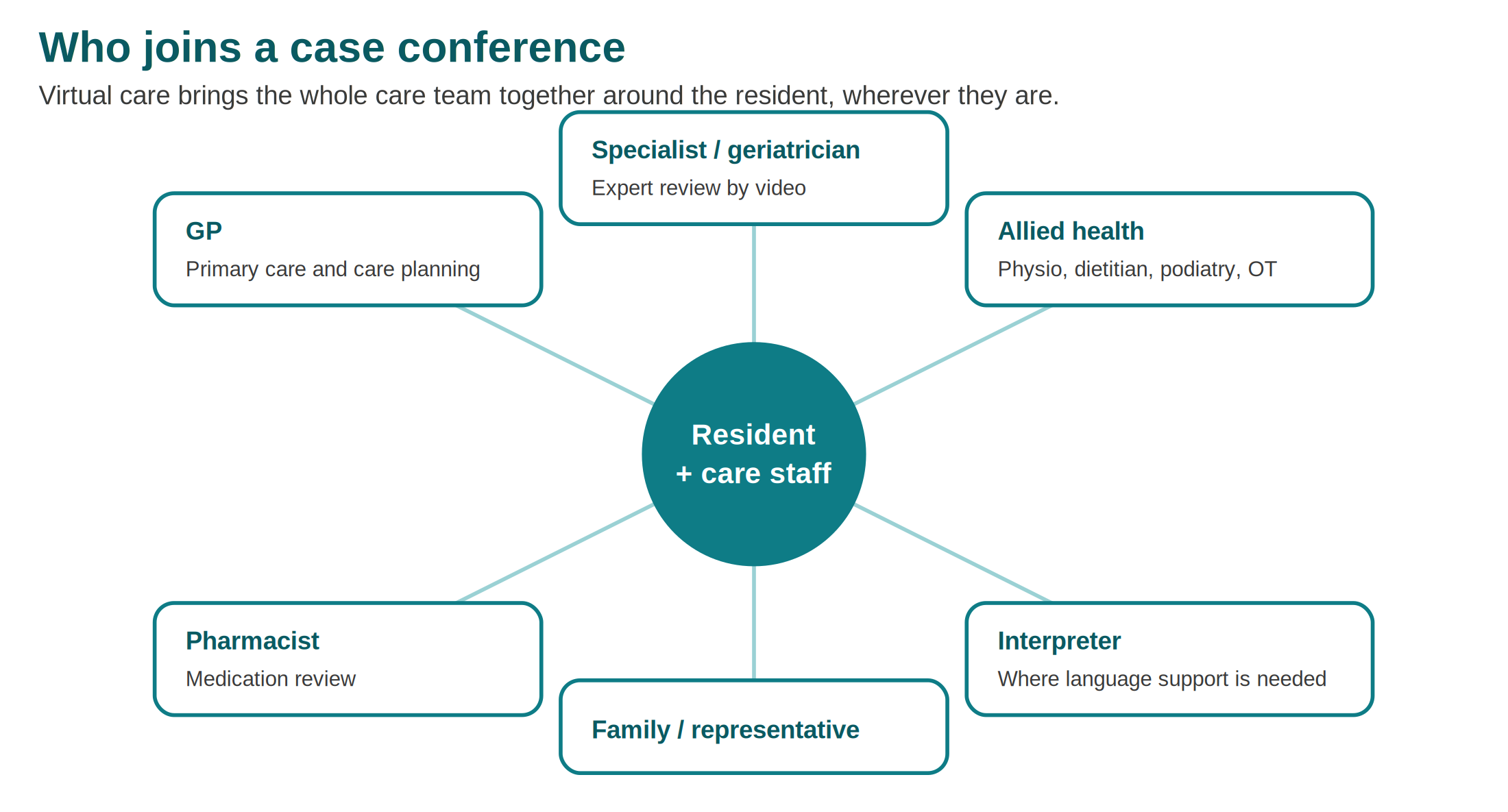
When a case conference helps
Case conferences are valuable at key moments in a resident's care:
- On admission, to set up the care plan with the right input.
- When a resident's condition or needs change significantly.
- For complex residents with multiple conditions and providers.
- For medication reviews involving a pharmacist.
- For advance care planning and end-of-life decisions.
- At regular care plan reviews.
Running a virtual case conference
A little coordination makes these run smoothly:
- Before: agree the purpose and who needs to attend. Send participants the relevant information ahead of time. Confirm consent for the resident's information to be discussed, and check whether the resident and family wish to take part.
- Set up: test the connection and make sure everyone can see and hear. Have the resident comfortable and supported.
- During: introduce everyone and their role. Keep the resident at the centre of the conversation. Work through the agreed agenda. Capture decisions and actions as you go.
- After: document the outcomes and the updated care plan in the resident's record. Share actions with the people responsible, and confirm the next review.
Coordinating allied health
Virtual care makes allied health input far easier to arrange. Physiotherapists, dietitians, podiatrists, occupational therapists, speech pathologists and others can review a resident by video, advise on care, and join case conferences without travelling. This is especially valuable where allied health is scarce locally. One Visionflex aged care network recorded 80 to 100 allied health virtual reviews across its sites.
To make it work:
- Build a list of the allied health providers your home works with and their virtual care availability.
- Prepare the resident and any relevant observations or images before the session.
- Use the right peripherals where a physical assessment element is needed (for example the examination camera for a wound or skin review).
- Document recommendations and fold them into the care plan.
Keeping the resident central
It's easy for a multi-party conference to talk over the resident. Don't let it. Introduce everyone, explain what's happening, invite the resident's views, and check their understanding. The point of bringing the team together is better care for the resident, so their voice belongs at the centre of it.
Need help?
- Visionflex support: visionflex.com/support | support@visionflex.com | +61 2 8914 4000 (9am to 5pm AEST)
- See also: Before, during and after a virtual care consultation and Specialised consultations.
Visionflex acknowledges the Traditional Custodians of Country throughout Australia and pays respect to Elders past, present and emerging.