
What this is: two clinical frameworks that make virtual handover clear and safe.
Who it's for: nurses, Aboriginal Health Workers, Aboriginal and Torres Strait Islander Health Practitioners, and any staff who hand over to a remote clinician.
Why structure matters more on a screen
When the clinician is not in the room, they rely on what you tell them and what you show them. A structured handover means nothing important gets missed and the consult starts focused. The two frameworks below are widely used across Australian health services, so most clinicians will already know them.
ISBAR: handing over the situation
ISBAR gives you a clear order to follow when you hand over a patient to the remote clinician.
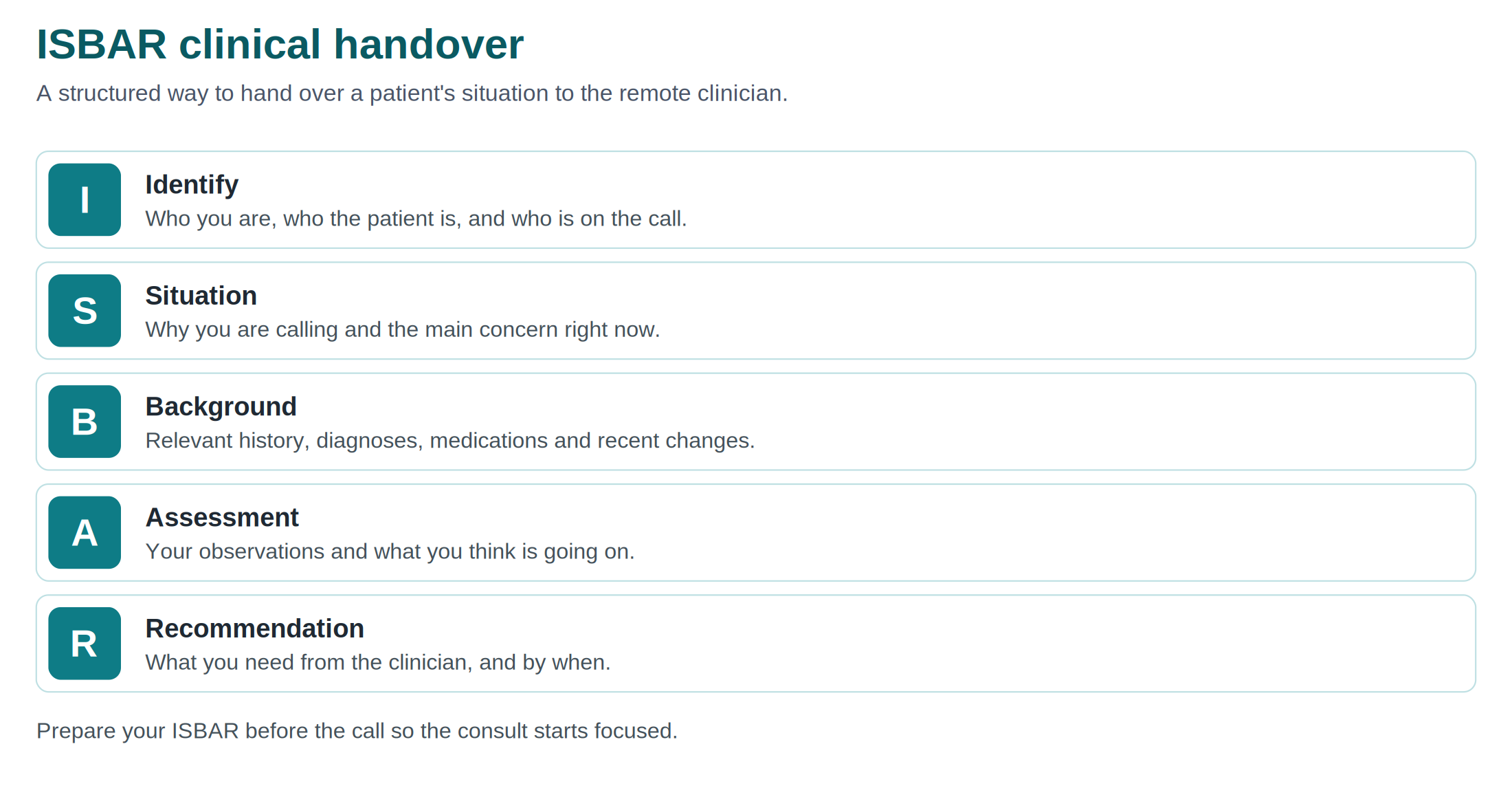
Prepare your ISBAR before the call. Write down the key points so you are not searching for them while the clinician waits. Keep it short and stick to what matters for this consult.
A to G: a systematic check
When a patient is unwell and you need to gather a full picture, the A to G assessment gives you a head-to-toe order so you do not skip anything.
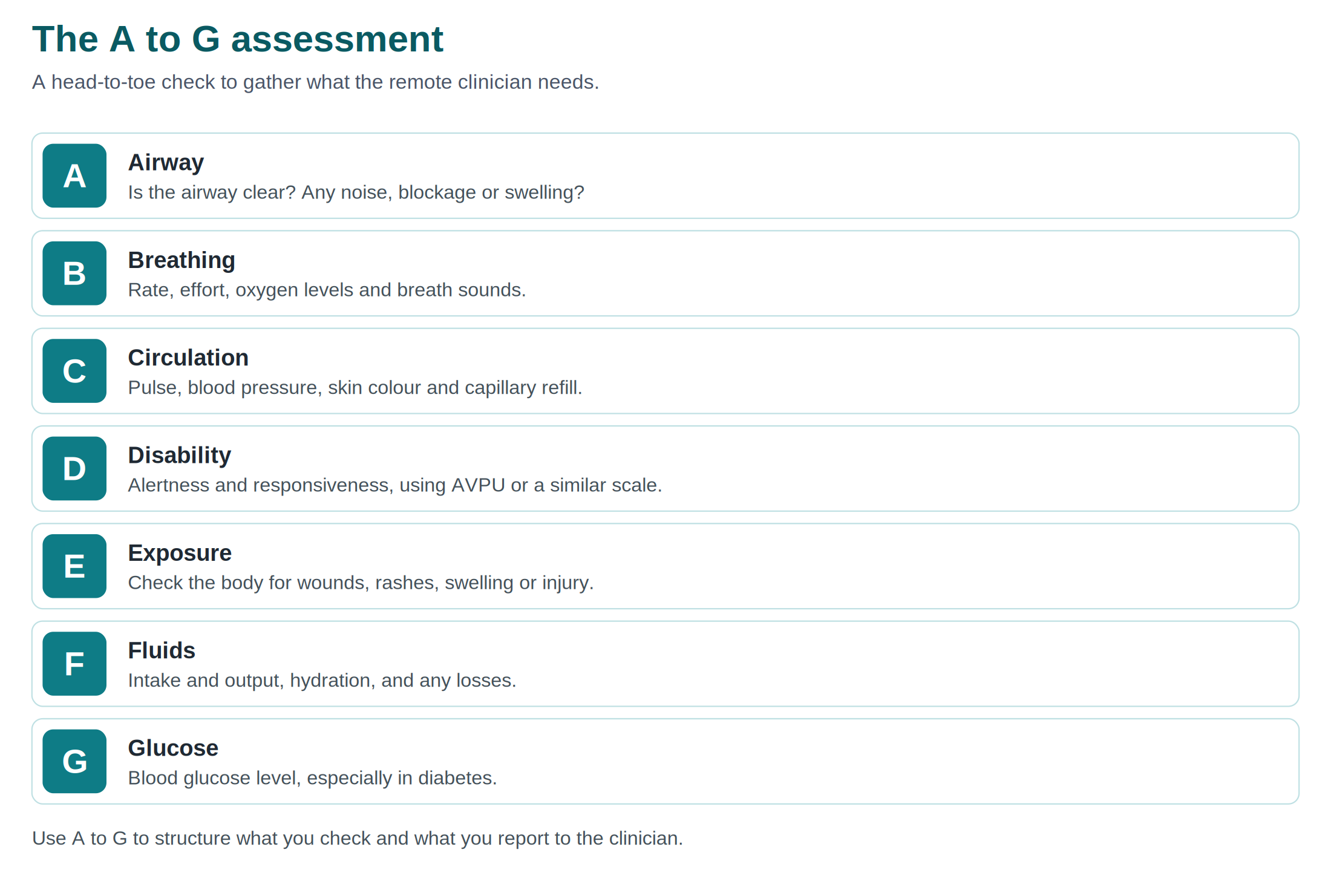
Work through A to G in order, and report what you find as part of the Assessment step in your ISBAR. If something at the top of the list is a problem, such as the airway or breathing, deal with that first and escalate straight away.
Putting them together
In practice the two work as one. Use A to G to gather what is going on, then use ISBAR to hand it over. For example: you complete an A to G check, find the patient is short of breath with low oxygen, and hand over with ISBAR, leading with the situation and your recommendation that the clinician join urgently.
Cultural safety in handover
A good handover includes the things that matter to the patient, not only the clinical facts. Where it is relevant and the patient is comfortable, note who is with them, how they want to be involved, and anything the clinician should know to make the consult respectful and safe. If you are an Aboriginal Health Worker or Practitioner, your read of the situation is part of the clinical picture, not an aside.
Need help?
- Visionflex support: visionflex.com/support | support@visionflex.com | +61 2 8914 4000 (9am to 5pm AEST)
- See also: Before, during and after a virtual care consultation; The patient-end role; Chronic disease monitoring and care
Visionflex acknowledges the Traditional Custodians of Country throughout Australia and pays respect to Elders past, present and emerging.